 INDIA
INDIA
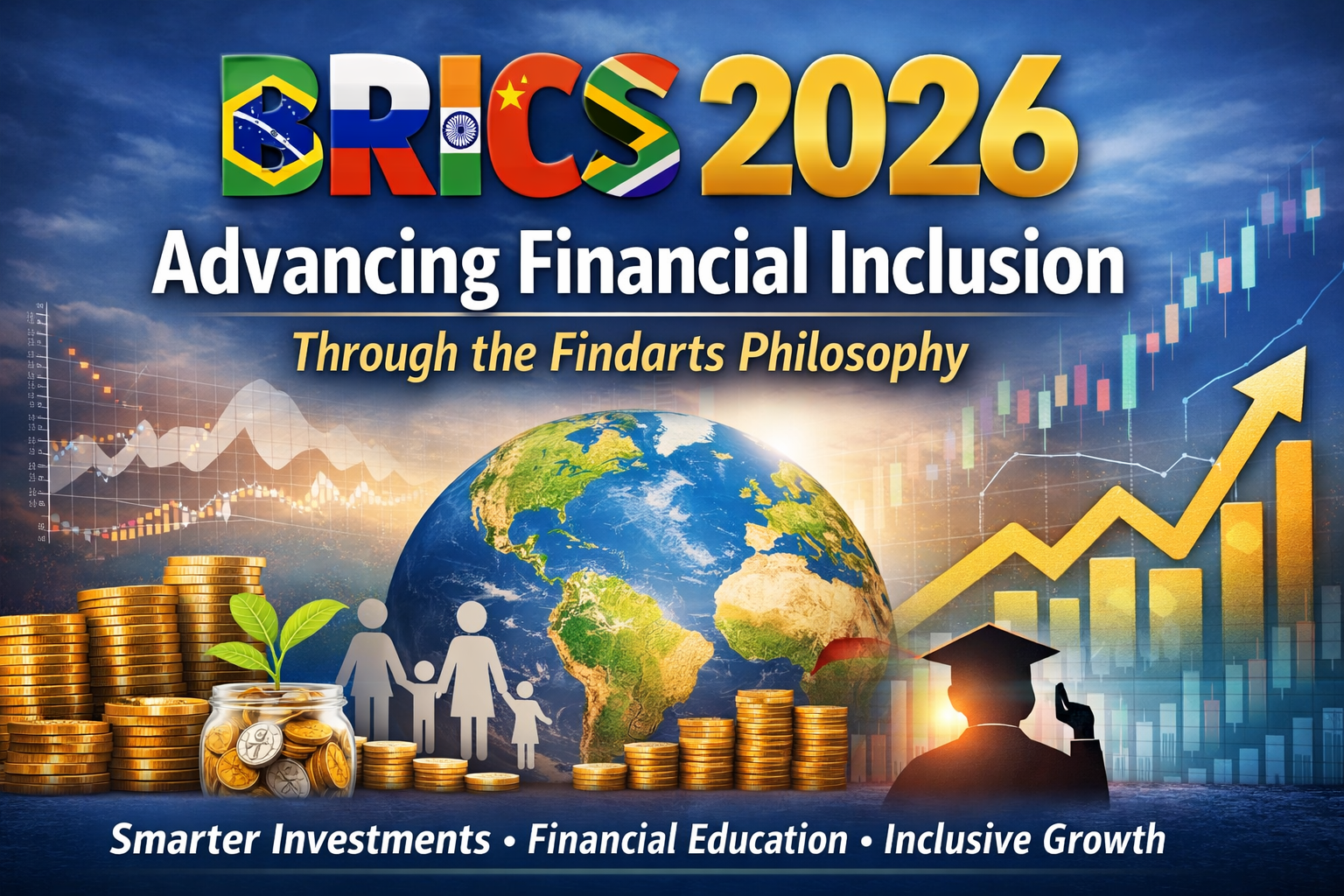
BRICS 2026: Advancing Financial Inclusion through the Findarts Philosophy
As the world prepares for BRICS 2026, the focus is steadily shifting from traditional economic growth to inclusive growth. Financial inclusion is no longer a buzzword; it is a necessity for sustainable development. Across BRICS nations, millions of individuals still remain outside the formal financial system, lacking access to safe savings, investments, insurance, and credit. This is where the Findarts Philosophy becomes highly relevant.
The Need for Financial Inclusion in BRICS Economies
BRICS countries represent some of the fastest-growing economies in the world, yet they also face common challenges: income inequality, financial illiteracy, informal savings habits, and limited access to regulated investment avenues. While digital adoption has increased, access alone does not guarantee financial well-being. Without awareness, guidance, and discipline, financial tools can do more harm than good.
True financial inclusion goes beyond opening bank accounts. It means empowering individuals to save responsibly, invest wisely, manage risk, and plan for the future
Understanding the Findarts Philosophy
The Findarts philosophy is built on a simple yet powerful belief:
Wealth creation should be accessible, disciplined, and sustainable for everyone.
Instead of promoting shortcuts or speculative behavior, Findarts emphasizes:
- Financial awareness before financial products
- Long-term wealth creation over short-term gains
- Discipline over luck
- Regulation and transparency over risk and uncertainty
This approach aligns naturally with the broader goals of BRICS 2026, which aim to strengthen economic resilience and social stability.
Moving from Exclusion to Empowerment
One of the biggest barriers to financial inclusion is lack of trust. Many individuals hesitate to invest due to fear of loss, misinformation, or past negative experiences. The Findarts philosophy addresses this gap by focusing on education-first inclusion.
By simplifying financial concepts and promoting structured investment options such as mutual funds, SIPs, and goal-based planning, individuals are gradually empowered to participate in formal financial markets with confidence.
Encouraging Smart Money Habits
In many emerging economies, people are drawn to schemes promising quick and easy money. These often lead to financial stress, debt, and emotional distress. Findarts promotes a shift from “easy money” thinking to “smart money” habits.
Key principles include:
- Regular saving, even in small amounts
- Power of compounding through SIPs
- Importance of emergency funds
- Long-term investing aligned with life goals
These habits not only build personal wealth but also contribute to overall economic stability.
Role of Technology with Responsibility
Digital platforms have transformed access to financial services across BRICS nations. However, technology without guidance can increase financial vulnerability. The Findarts approach supports the use of technology as an enabler, not a replacement for human understanding.
Personalized advisory, transparent communication, and ethical practices ensure that technology serves inclusion rather than exploitation.
Mutual Funds as a Tool for Inclusion
Mutual funds play a critical role in the Findarts philosophy. They allow individuals to participate in capital markets without requiring large capital or deep market expertise. Through professional management and diversification, mutual funds reduce risk while offering growth opportunities.
Systematic Investment Plans (SIPs), in particular, are a powerful inclusion tool. They encourage discipline, affordability, and long-term thinking, making wealth creation possible even for first-time investors and small savers.
Impact on Society and the Economy
When individuals are financially secure, the impact goes beyond households:
- Reduced debt stress
- Improved mental well-being
- Higher savings rates
- Increased participation in the formal economy
- Stronger and more resilient financial systems
The Findarts philosophy contributes to building a financially aware society, which aligns with the broader vision of BRICS 2026: inclusive, balanced, and sustainable growth.
Looking Ahead: BRICS 2026 and Beyond
BRICS 2026 is not just about policy discussions and economic alliances. It is about shaping a future where growth benefits everyone. Financial inclusion will be a key pillar of this future, and philosophies like Findarts offer a practical, people-centric path forward.
By promoting awareness, discipline, and long-term vision, the Findarts philosophy demonstrates that financial inclusion is not charity—it is empowerment.
Conclusion
Advancing financial inclusion requires more than access to products; it requires a shift in mindset. As BRICS nations move toward 2026, embracing responsible financial philosophies will be crucial. The Findarts philosophy stands as a reminder that real progress happens when individuals are empowered to make informed, disciplined, and confident financial decisions.
Because when people grow financially, nations grow stronger too.










About the Author